
.png)
In late July 2026, the bitcoin custody landscape was forever changed by the disclosure of a critical vulnerability with Coldcard hardware wallets. Many people utilizing these devices for a singlesig wallet lost a substantial amount of bitcoin. Those using multisig wallets were far more protected, leading to a renewed appreciation for multisig technology and especially multi-vendor multisig. In this article, we’ll cover what multi-vendor multisig is, why it’s attractive, and some tradeoffs to consider.
Multisig eliminates single points of failure
If you hold a substantial bitcoin balance that would be painful to lose, it may not be wise not to let it hang by a single thread. Trusting a custodian means your funds could be mismanaged, or an attractive target for hackers. Meanwhile, taking self-custody with a singlesig wallet means the one key to your funds could be misplaced, destroyed, or stolen.
The solution to these dangers is redundancy deployed with multisig security, which distributes control of a bitcoin balance across multiple unique keys. Each key could then be managed separately, either in different locations under your own control, or with the help of key agents—friends, family, or institutions with limited, partial participation—an arrangement known as collaborative custody. There are many combination possibilities. When done properly, bitcoin can no longer be lost due to an isolated incident with a key or a custodian. If an incident does occur, the affected key can be replaced with a new one, restoring the security to full health.
Each key must have a source
Although multisig allows for separately stored keys, each key must also be initially generated somehow. The generation process often involves a hardware wallet, which might offer a random number generation algorithm, or allow the user to manually input their own entropy. The method must be secure, otherwise the key could be vulnerable to attackers regenerating it, which is exactly the issue that occurred with many Coldcard-generated keys.
Therefore, diversity in the key generation method can be useful beyond the diversity of key storage locations. If all the keys protecting a multisig wallet were generated with the same faulty technology, it could disrupt multiple components of the multisig wallet with a single event. The multisig wallet would still provide more protection than a singlesig wallet, but less than ideal redundancy against this particular issue.
Multi-vendor multisig combines keys from different hardware
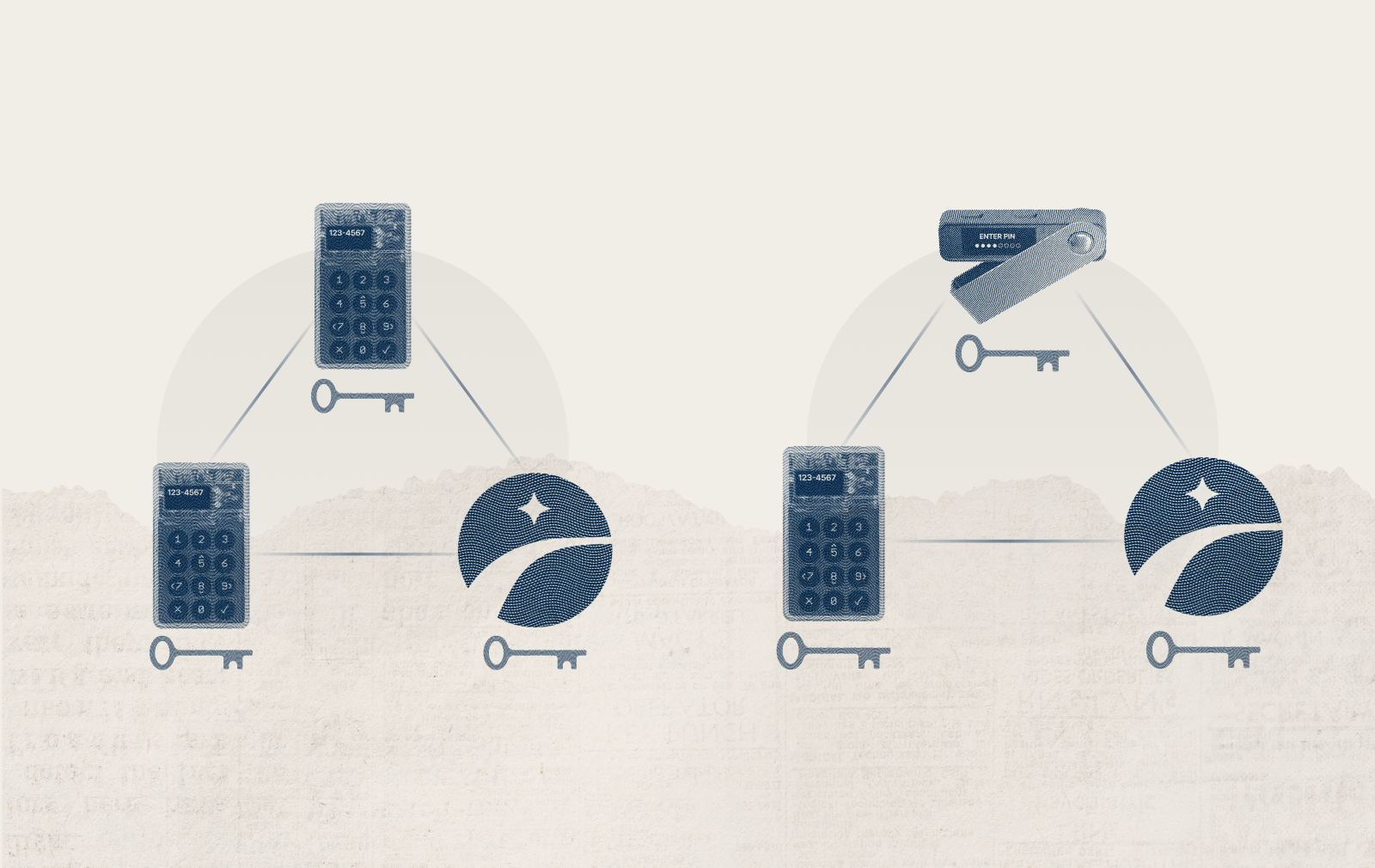
Mitigating the possibility of multiple keys being affected by a single key generation vulnerability is possible by using hardware wallets from different manufacturers or “vendors,” hence the name multi-vendor multisig. A 2-of-3 multisig wallet uses three keys, and each key could be generated with a different hardware wallet brand. That way, if one hardware wallet company discloses a serious vulnerability, only a third of keys involved with the multisig wallet would be affected. This could also apply to other device-specific vulnerabilities unrelated to key generation, such as a bug relevant to signing transactions.
Before the Coldcard incident, a critical vulnerability in a widely-used key generation process was seen as theoretical. There were various perspectives on how likely it was to occur, leading to a range of views about the importance of a multi-vendor approach to multisig wallets. After the Coldcard incident manifested, those perspectives were necessarily recalibrated, and multi-vendor multisig has since surged in popularity.
Is multi-vendor multisig necessary for adequate protection?
There is no doubt that multi-vendor multisig can provide peace of mind against potential hardware wallet vulnerabilities. The peace of mind isn’t an illusion, either—there are real, tangible security benefits. Generally speaking, during the Coldcard incident, the fewer Coldcards that a multisig wallet had used for its key generations, the less exposed the wallet was to the issue.
However, it’s also true that a multisig wallet itself already provides significant protection against issues with the individual keys comprising it. At the time of writing, there are very few reported cases of a multisig address having funds stolen as a direct result of the Coldcard vulnerability. Naturally, that includes multisig wallets in which the majority or entirety of keys were Coldcard-generated. This supports the notion that a multi-vendor approach to multisig isn’t entirely necessary. Multisig combined with security best practices is robust, regardless.
Are there reasons not to choose multi-vendor multisig?
Before deciding to utilize multiple hardware wallet manufacturers for a multisig wallet, there can be a few tradeoffs to consider. Buying devices from multiple locations can increase your "data footprint" and the chance of exposure in the event of a data breach. However, minimizing this risk is also possible, by researching and utilizing common privacy techniques for payment and delivery.
Importantly, becoming familiar and comfortable with a hardware wallet interface comes naturally for some people, but not for everyone. Learning how to use a particular hardware wallet model safely and successfully can take time and effort. Deciding to use multiple different hardware wallets magnifies the operational knowledge needed. As a result, some users might encounter frustrations more often, or have an increased chance of making a mistake. Operational mistakes are another risk factor that can cause the loss of bitcoin.
If you are someone who doesn’t feel comfortable navigating multiple different hardware wallet interfaces but still want a multisig wallet built with keys from a variety of sources, collaborative custody is a strong solution. With an Unchained vault, you can establish Connections with trusted friends and family members to let them participate in your security by managing a single key to your vault. You also gain access to a key uniquely managed by Unchained. Incorporating these keys into your multisig arrangement doesn’t allow any one entity to have control over your bitcoin, because multiple keys are required to access funds. Alternatively, Unchained offers 1-on-1 education and support through our Signature program, which can help you build the confidence needed to operate multiple hardware wallet brands yourself.
The strongest solutions are all available at Unchained
Multisig is required to remove single points of failure for your bitcoin, which is why all Unchained products are built with multisig as the underlying foundation. Further details, such as how many keys are involved, how those keys were generated, where they are stored, and who manages them are all customizable. Each individual person or business entity has a unique situation and different needs. Our team of experts is here to listen to your concerns and help you evaluate the best option to successfully secure your bitcoin savings for the decades to come. We invite you to book a free consultation with us to learn more and ask questions, and we look forward to working with you.
.png)
.png)