

We agree with many of our clients that bitcoin is the most interesting financial innovation of our lifetimes. An open source software protocol that manifests timeless properties of that critical social technology we call money is truly novel. However, as the financial system incorporates this new asset into popular products and transactions, the existing frameworks and terminology that govern the financial world still apply to bitcoin. As a borrower, one important term to understand is hypothecation and its more well-known relative, rehypothecation.

Bitcoin-backed lending was Unchained’s first product, launched in 2017, and we remain as enthusiastic as ever about the business. Over the years, we have seen new lenders enter the space only to watch some fail, sometimes spectacularly, due to poor risk management and credit practices. Fortunately, there has been a concerted effort by market participants to simplify products and limit the risks of rehypothecation, especially the risks associated with attempting to generate yield or otherwise take speculative risk with client bitcoin. As a bitcoin company, we are grateful that these risks are being taken seriously and optimistic that more conservative business models will benefit the entire industry.
Nevertheless, words matter, and they are critically important to ensuring customers understand the financial products they are using. Regarding rehypothecation, some people seem to believe that once a lender surrenders possession and control of a customer’s bitcoin to an unrelated third party, so long as that third party claims good intentions, there has been no rehypothecation. This is incorrect. If your lender has sent your bitcoin to a third party, there has been rehypothecation even if that third party promises to take good care of it and not send it to a fourth party.
Some in the bitcoin-backed lending market have attempted to redefine the term “no rehypothecation” away from the commonly accepted financial markets definition to a counterintuitive meaning of rehypothecation “less than two times.” This definition seems to suggest lenders get a pass on their first rehypothecation.
Rehypothecation once is still rehypothecation. If your lender immediately sends your bitcoin to a third party, your lender is simply a middleman and not the lender, while the true lender often remains unknown. You deserve to know who controls your bitcoin.
Unchained does not rehypothecate bitcoin collateral for any reason.
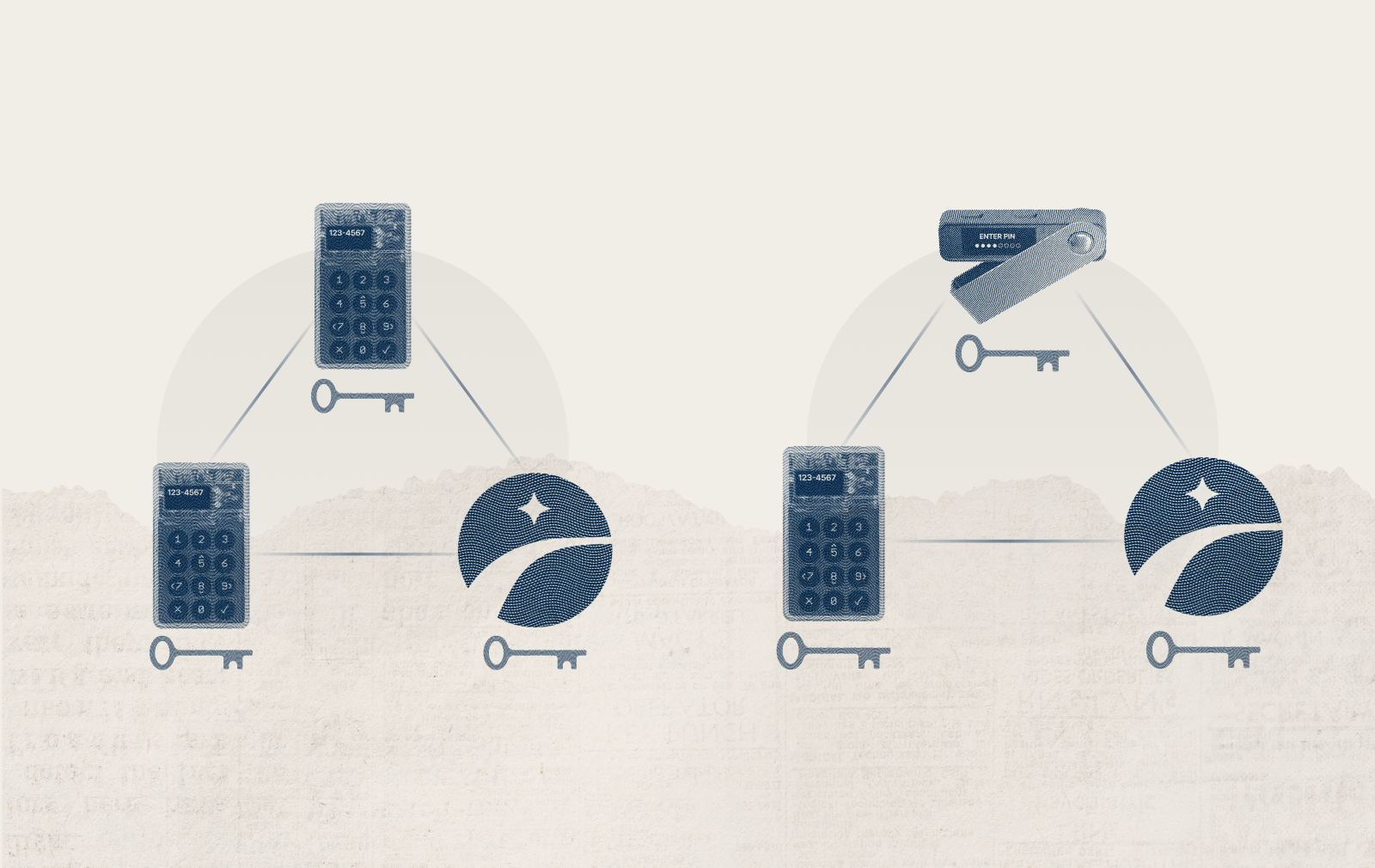
As we explained in this essay, hypothecation is simply pledging or transferring collateral. When it comes to bitcoin-backed loans, hypothecation occurs when borrowers pledge their BTC to a lender in order to secure a fiat loan. Rehypothecation occurs when the lender re-pledges or transfers that bitcoin to a third party for any reason. The following diagram may be helpful:

Like fellow bitcoin-backed lenders, Unchained is what is called a non-bank lender. Unlike banks, which have the ability to literally create deposits when they issue loans, non-bank lenders must first obtain lending capital to make loans. At its simplest level, there are two main ways that non-bank lenders obtain lending capital.
The first is when the loan originator sells or pledges economic rights in the loans (but not the collateral) to a financial institution. This method is common in traditional markets such as home, auto, and even personal consumer lending. If you have a home mortgage, your loan may have been sold multiple times. An investor purchases the economic benefits of the loan made by the non-bank lender, and that non-bank lender in turn forwards some of the payments it receives from borrowers to the investor. This is how Unchained funds its lending business and acts as both loan originator and servicer. We can call this the “true lender model” for short.
The second is when the loan originator rehypothecates collateral to a third-party in exchange for lending capital. In this arrangement, the third-party typically takes possession and control of the collateral originally pledged to the loan originator to secure a loan to the loan originator. This model is similar to how hedge fund borrowers interact with prime brokers who rehypothecate collateral. This is the collateral rehypothecation model. We can call this the “middleman model” for short.
This simple chart helps illustrate the difference:

Both the true lender and middleman models provide funding for non-bank lenders and facilitate loans for borrowers. However, only the true lender model allows the loan originator to maintain control of the collateral if, like Unchained, it serves as loan servicer. Bitcoin-backed lenders using the middleman model send (i.e. rehypothecate) your bitcoin to a third-party lender. This is important for two reasons.
First, the middleman that originated your loan no longer has control of your bitcoin - your bitcoin is now controlled by an unknown third-party lender.
Second, you cannot be sure of the custody environment securing your bitcoin collateral. Even if your middleman originator discloses the custodian, once the middleman has surrendered control, it typically can’t prevent that custodian from being changed at any time during the term of your loan. Given the nature of a digital bearer asset, this is critical.
At Unchained, we remain committed to a policy of strict non-rehypothecation and transparency. We never send your bitcoin collateral to a third party and you will always be able to see where your bitcoin is during your loan. This simplifies the borrowing experience for our clients.
If you’re borrowing from another lender, there are two important questions to ask:
- Who is holding my bitcoin collateral?
- What is the custody environment securing my bitcoin?
While rehypothecating borrower bitcoin to third party funding partners would provide some advantages to Unchained, those advantages would come at the expense of our principles. Rehypothecation would make it easier for us to raise capital and open access to cheaper loan funding. However, it would cause us to lose control over our borrowers’ bitcoin. We believe that maintaining control of collateral at all times and offering our clients the most conservative, transparent loan product in the market is the best way to build long-term relationships with long-term bitcoiners.
Unchained wants to be your lender, not your middleman.
Jon Melton is Head of Lending for Unchained.
Alan Lane is an Advisor focused on strategic matters for Unchained.
Unchained Capital, Inc. (NMLS ID: 1900773), B&C Lending LLC (NMLS ID: 2656661), and Bitcoin Collateral Services LLC (NMLS ID: 2423070) are licensed to provide certain financial services. Loans may be made or arranged pursuant to a California Financing Law license. Other restrictions and limitations apply. For more information, visit unchained.com/loans. Loans are subject to approval. A loan application is required. Lending services are available to U.S. residents. Lending services may not be available in all states.
.png)
.png)
.png)